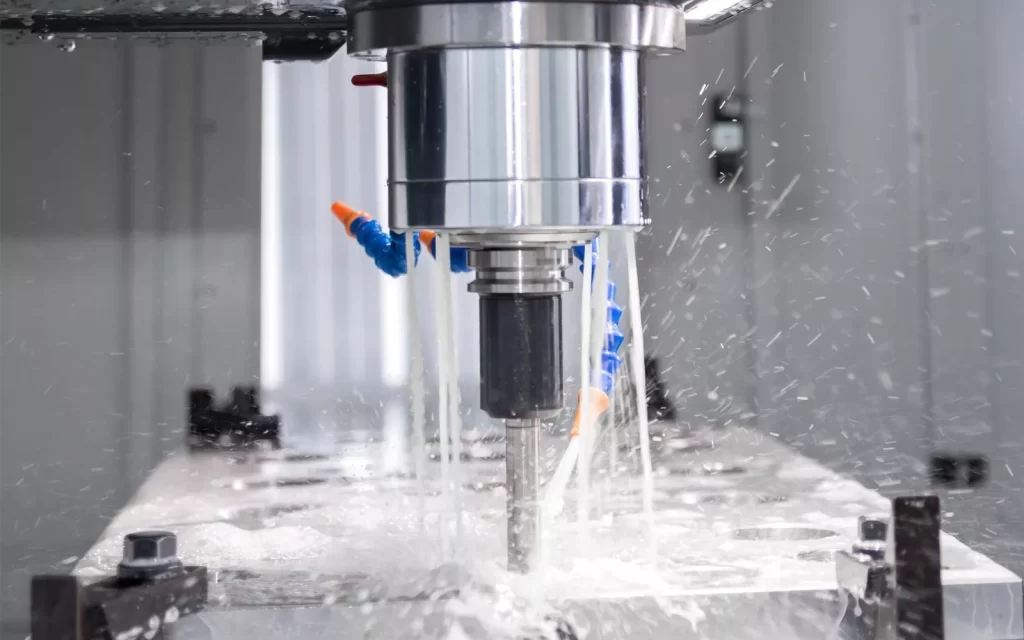
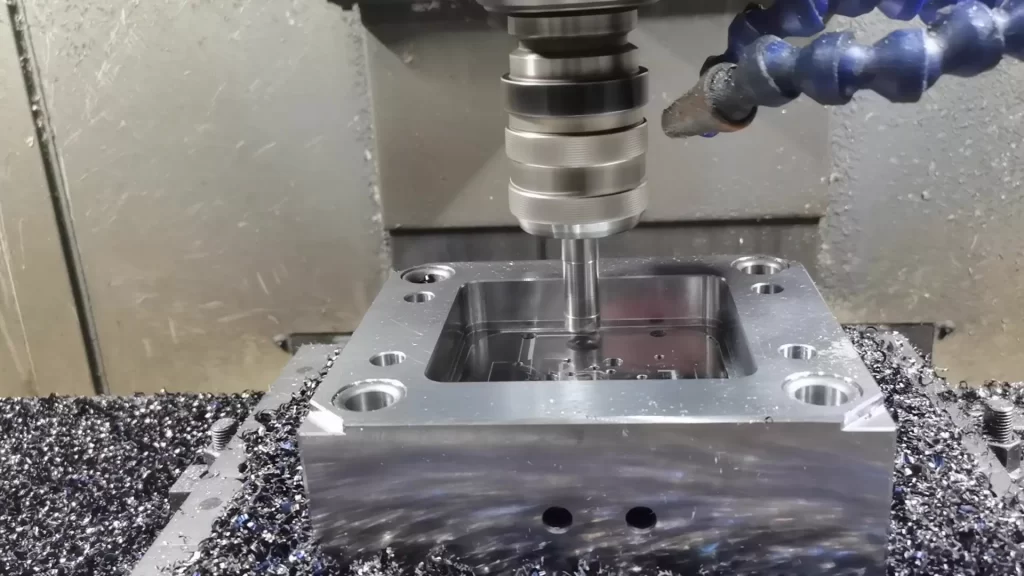
In today’s manufacturing industry, as the digital transformation accelerates, significant changes are taking place in the field of mechanical processing. CNC machining, with its exceptional level of automation and precise processing capabilities, is widely used and continues to grow. Whether it’s the aerospace industry’s stringent precision requirements for critical components or the mass production and high-efficiency needs of the automotive industry, CNC machining is more than capable of handling these demands.
However, traditional manual machining methods have not been obsolete. In specific fields, such as the creation of craft products with high artistic quality and personalization requirements, or the processing of special mechanical parts in single or small batches, and temporary processing during equipment maintenance, manual machining still plays a unique and irreplaceable role. Relying on the skilled craftsmanship and adaptability of artisans, it continues to contribute significantly to the diverse landscape of mechanical processing, alongside CNC machining.
And now let’s take a closer look at the concepts, advantages, disadvantages, and preferred application scenarios of CNC and manual machining.
What is CNC Machining?
CNC machining, or Computer Numerical Control machining, is a modern manufacturing method where machine tools are controlled by computer programs. Unlike traditional manual machining, CNC machining uses software like CAD/CAM to generate design models and machining paths. These instructions are converted into CNC codes (G-code), guiding the machine tool to execute precise operations such as tool movement, feed speed, and cutting depth. By precisely executing processes like cutting, drilling, and milling through pre-written programs, CNC machining can produce parts with complex shapes and high precision. The advent of CNC machining revolutionized traditional manufacturing with its high accuracy, automation, and ability to process complex shapes, making it an essential technology in modern industries. For projects requiring precision parts or complex designs, CNC machining is undoubtedly the best choice.
Common CNC Machining Equipment
There are many types of CNC machine tools, commonly including:
- CNC Milling Machines: Used for flat machining, slot machining, and complex surface forming.
- CNC Lathes: Suitable for machining rotary parts such as shafts.
- Multi-axis Machines: Usually 3-axis, 4-axis, or 5-axis machines for complex parts.
- CNC EDM Machines: Used for machining high-hardness, complex-shaped molds and parts.
What is Manual Machining?
Manual machining is a traditional manufacturing method, primarily relying on technicians to operate non-CNC machine tools such as ordinary lathes, milling machines, and drill presses. By manually adjusting tool positions, feed rates, and cutting depths, technicians perform operations like cutting, drilling, and forming. This method is typically used for producing simple parts, prototypes, or custom single-piece machining.
Common Manual Machining Equipment
- Conventional Lathes: Primarily for machining cylindrical workpieces like shafts, sleeves, and threads.
- Conventional Milling Machines: Used for flat machining, slot machining, or simple curve forming.
- Drill Presses: Used for drilling, reaming, or threading operations.
- Grinding Machines: Used for finishing surfaces to improve surface quality and dimensional accuracy.
The Main Differences of CNC Machining and Manual Machining
| Comparison Factor | CNC Machining | Manual Machining |
|---|---|---|
| Operation Method | Controlled by a computer, executing pre-programmed machining paths. | Operated manually by technicians adjusting machines and tools. |
| Precision | High precision (tolerances can reach ±0.005mm), strong consistency. | Precision depends on the technician’s skill, usually ±0.1mm, difficult to maintain consistency. |
| Efficiency | Automated, suitable for complex parts and mass production. | Lower efficiency, suitable for small batches with longer adjustment times. |
| Complexity | Capable of handling complex geometries such as 3D surfaces or deep hole machining. | Suitable for simple shapes like straight lines, planes, cylinders, etc. |
| Flexibility | Requires program adjustments, ideal for standardized production. | Highly flexible, suitable for rapid adjustments and custom needs. |
| Cost | High initial investment (expensive equipment), but low per-piece cost. | Low initial investment, but higher labor costs. |
| Skill Requirements | Operators need CAD/CAM programming and equipment maintenance skills. | Technicians need extensive operating experience and machining skills. |
Advantages and Disadvantages of CNC Machining
CNC Machining Advantages:
- High Precision and Repeatability: CNC machines can achieve extremely high precision and excellent repeatability, ideal for high-demand production tasks.
- Automation: Reduces human intervention, minimizing errors, and ensuring consistent quality.
- High Flexibility: Through programming, CNC machines can easily adapt to different processing needs, handling complex and customized parts.
- Ideal for Complex Parts: CNC machining is especially suitable for producing parts with complex geometries, even allowing multi-process machining on the same machine.
- High Efficiency: CNC machines can operate for extended periods and at high speeds, ideal for mass production.
- Lower Labor Costs: Automation reduces reliance on operators, cutting labor costs.
CNC Machining Disadvantages:
- High Equipment Cost: CNC machines have a high purchase and maintenance cost, leading to significant initial investment.
- High Skill Requirements: Operating CNC machines requires advanced technical skills, especially in programming and debugging. Inexperienced technicians may cause machining issues.
- Not Ideal for Large-Scale Simple Parts: For large quantities of simple parts, traditional machining may be more cost-effective.
- Maintenance and Downtime: CNC machines require specialized technicians for maintenance, and failures may halt production, impacting delivery timelines.
- Material Requirements: Some materials (e.g., high-hardness metals) may cause significant tool wear, requiring frequent tool changes, raising machining costs.
- Complex Programming: For complex parts, precise programming is required. Mistakes in programming can affect machining accuracy and efficiency.
Advantages and Disadvantages of Manual Machining
Manual Machining Advantages:
- Low Initial Investment: Manual machining equipment is relatively inexpensive, making it suitable for small businesses or startups, especially in budget-constrained environments.
- High Flexibility: Manual machining allows operators to make adjustments based on their experience, suitable for small batches and custom parts.
- No Need for Complex Programming: Unlike CNC machining, manual machining does not require programming or high technical preparation, making it ideal for rapid production setup.
- Suitable for Repairs and Adjustments: Workers can directly adjust machines and fix issues without relying on specialized technicians.
- Lower Machine Maintenance Costs: Manual machine tools are simpler and have lower maintenance and repair costs.
- High Adaptability: Manual machining is highly adaptable to special or complex machining tasks without needing complex program designs.
Manual Machining Disadvantages:
- Lower Precision: Manual machining offers lower precision compared to CNC, and quality can be inconsistent, depending on operator skill.
- Lower Efficiency: Manual machining is slower, especially for large batch production, where efficiency lags behind CNC.
- Inconsistent Process: Since manual operations depend on human intervention, part quality may vary between batches, leading to poor repeatability.
- High Labor Intensity: Manual machining requires significant human effort, with operators frequently adjusting and correcting processes, leading to higher labor intensity.
- Complexity in Process: For more complex parts, manual machining requires more experience and skills, and the process is harder to control, increasing the risk of errors.
- Heavy Dependence on Personnel: The quality of manual machining highly depends on the technician’s experience. Inexperienced operators may cause machining errors and quality problems.
Applicable Scenarios for CNC Machining and Manual Machining
Preferred Application Scenarios of CNC Machining
CNC machining ensures higher efficiency and quality in the following scenarios:
- High Precision Needs:
- Typical Applications: Aerospace parts (e.g., turbine blades), medical devices (e.g., surgical tools, implants), high-end consumer electronics housings.
- Reason: CNC machining achieves precision up to ±0.005mm, eliminating human error.
- Complex Geometries:
- Typical Applications: Automotive engine parts (e.g., cylinder heads), molds (e.g., injection molds, stamping dies), complex mechanisms in machinery.
- Reason: CNC machines use multi-axis machining to handle intricate processes that manual machining cannot achieve.
- Mass Production:
- Typical Applications: Consumer goods (e.g., watch parts, eyeglass frames), industrial components (e.g., nuts, bearings), appliance parts (e.g., compressor components).
- Reason: Automation increases efficiency, allowing continuous operation with reduced labor costs.
- Material Variety:
- Typical Applications: Aluminum alloy aerospace parts, titanium medical devices, plastic electronics housings.
- Reason: CNC machining adapts to various materials using different tools, from soft to hard materials.
- Economy in Large-Scale Production:
- Typical Applications: Automotive parts (e.g., gears, brake discs), precision optical components, custom-engineered parts.
- Reason: CNC machining lowers per-unit costs by optimizing processes and programs for high-volume production.
- High Repeatability:
- Typical Applications: Semiconductor equipment parts, medical device consumables (e.g., syringe molds), ship components (e.g., propellers).
- Reason: CNC machining ensures consistency and reliability, especially for critical parts.
Preferred Application Scenarios of Manual Machining
Manual machining is more economical and flexible in the following situations:
- Small Batch or Single-Part Production:
- Typical Applications: Replacement parts in machinery repair, testing parts for equipment adjustments, custom one-off or limited-run production.
- Reason: Manual machining doesn’t require programming, allowing for quick setup and lower setup costs.
- Frequent Design or Process Changes:
- Typical Applications: Prototype design and development, experimental lab equipment parts, test machining.
- Reason: Manual machining is flexible and can easily accommodate design changes without reprogramming.
- Simple Parts:
- Typical Applications: Small shafts, washers, pipe fittings, simple machine brackets or fixtures.
- Reason: Manual machining is more efficient for basic operations without needing complex setup.
- Budget-Constrained Projects:
- Typical Applications: Small business or individual mechanical projects, non-critical component machining.
- Reason: Manual machining equipment is less costly and suitable for small-scale or low-budget operations.
- Handcraft or Artistic Parts:
- Typical Applications: Custom metal engravings, model or craft parts.
- Reason: Manual machining allows operators to directly control details for artistic or fine-tuned craftsmanship.
- Repair and Modification of Existing Parts:
- Typical Applications: Repair worn-out shafts or holes, machining irregular parts.
- Reason: Manual machining offers flexibility for handling non-standard shapes or quick repairs.
Conclusion
CNC machining and manual machining are complementary rather than opposing methods. Choosing between them depends on project needs, budget, and delivery timelines. Understanding the advantages and disadvantages of each can help businesses optimize production efficiency while maintaining quality and cost-effectiveness.
Need further assistance or a custom machining solution? Contact us for expert advice!