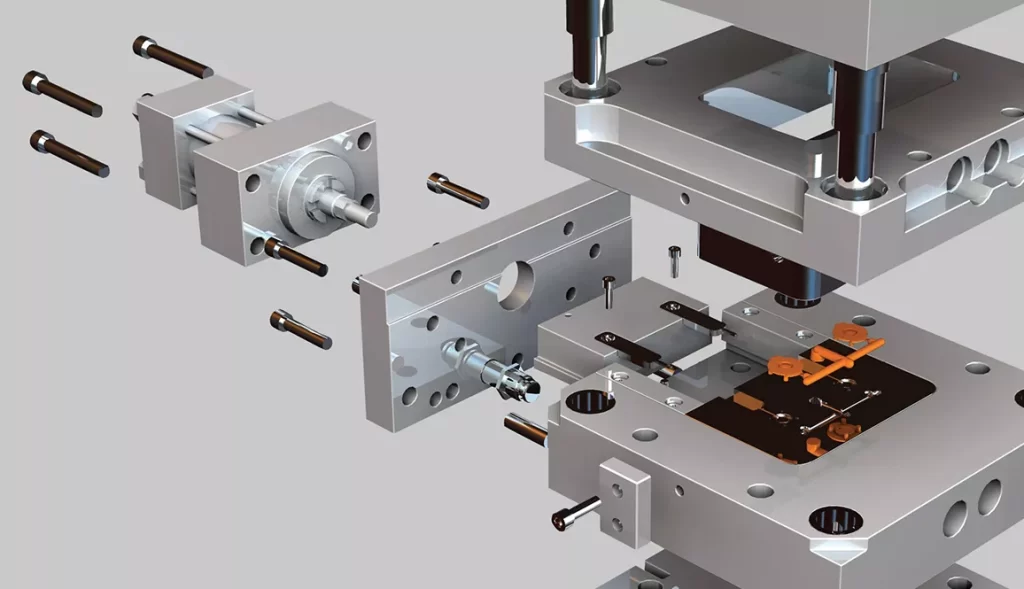
In the dynamic realm of modern manufacturing, mold making serves as the linchpin that enables the mass production of an extensive range of products. From the sleek casings of our smartphones to the robust components in industrial machinery, molds are the unsung heroes behind the scenes, shaping the world around us. This article aims to provide an in – depth exploration of the mold – making process, delving into each stage with meticulous detail, offering real – world examples, and presenting data – driven insights. Additionally, we’ll conclude with a comprehensive set of frequently asked questions to address common queries in the field.
1. Design Phase
The mold – making odyssey commences with the design phase, a critical step that lays the foundation for the entire process. Designers leverage state – of – the – art computer – aided design (CAD) software, such as Autodesk Inventor or SolidWorks. These powerful tools empower designers to create highly detailed 3D models of the parts to be molded.
Take, for example, a company manufacturing automotive interior components. When designing a dashboard mold, designers must account for every curve, contour, and hole. They need to ensure that the final product not only fits perfectly within the vehicle but also meets ergonomic and aesthetic requirements. Using CAD software, they can simulate the molding process, predicting potential issues like material flow and part shrinkage. This allows them to make adjustments to the design before moving forward, saving both time and cost.
During this stage, factors like draft angles are of utmost importance. A draft angle is the slight taper added to the walls of a mold cavity to facilitate the easy removal of the molded part. According to a study by MoldMaking Technology Magazine, a well – designed draft angle of 1 – 3 degrees can reduce the ejection force required by up to 50%. This not only minimizes the risk of part deformation during removal but also extends the lifespan of the mold. In the case of a plastic toy mold, a proper draft angle ensures that the toy can be easily popped out of the mold without any breakage or distortion.
2. Mold Material Selection
Once the design is finalized, the next crucial decision is selecting the appropriate mold material. The choice of material significantly impacts the mold’s performance, cost, and lifespan. The three most commonly used materials in mold making are steel, aluminum, and plastic, each with its unique set of characteristics.
Steel: Steel is renowned for its exceptional strength and durability. It can withstand high – pressure and high – temperature environments, making it ideal for high – volume production. For instance, in the automotive industry, where millions of identical parts are produced annually, steel molds are the material of choice. A steel mold used in manufacturing engine blocks can endure thousands of molding cycles without significant wear and tear. However, steel is relatively expensive, and its machining process requires specialized equipment and expertise.
Aluminum: Aluminum offers a good balance between cost and performance. It is lighter than steel, has excellent machinability, and is suitable for medium – volume production. A company manufacturing consumer electronics might use aluminum molds to produce smartphone cases. Aluminum molds can be machined quickly, reducing lead times, and are cost – effective for production runs in the thousands. But compared to steel, aluminum has lower heat resistance and strength.
Plastic: Plastic molds are the most cost – effective option, especially for low – volume production and prototyping. A startup developing a new kitchen gadget can use plastic molds to quickly produce samples for market testing. Plastic molds are easy to machine and can be fabricated in a short time. However, they are not as durable as steel or aluminum and are limited in terms of the materials and production volumes they can handle.
The following table provides a detailed comparison of these materials:
| Mold Material | Cost | Strength | Heat Resistance | Machinability | Suitable for |
|---|---|---|---|---|---|
| Steel | High | Excellent | High | Moderate | High – volume production, parts with high strength requirements. For example, in the aerospace industry, steel molds are used to manufacture turbine engine components. |
| Aluminum | Moderate | Good | Moderate | Good | Medium – volume production, parts where weight is a concern. Such as in the production of lightweight bicycle frames. |
| Plastic | Low | Low | Low | High | Low – volume production, prototypes. For instance, when a toy company is testing a new toy design. |
3. Mold Machining
After choosing the mold material, the machining process begins. This is where the raw material is transformed into a precision – crafted mold. There are several machining methods available, each with its own advantages and applications.
CNC (Computer Numerical Control) Machining: CNC machining is a widely adopted method in mold making due to its high precision. It can achieve tolerances as low as ±0.001 inches. A mold – making company producing medical device components relies on CNC machining to ensure the accuracy of the mold cavities. The CNC machine follows the instructions from the CAD model, removing material layer by layer to create the desired shape. This method is highly efficient for producing complex geometries with consistent quality.
EDM (Electrical Discharge Machining): EDM is particularly useful for creating intricate shapes and cavities that are difficult to machine using traditional methods. It works by using electrical discharges to erode the material. According to a report by Modern Machine Shop, EDM can produce surface finishes of up to 0.8 µm Ra. For example, in the production of injection molds for jewelry, EDM is used to create the detailed patterns and textures on the mold surface. The process allows for the reproduction of even the most delicate designs with great accuracy.
Milling: Milling is a versatile machining process that can be used for a variety of mold – making tasks. It is often used for roughing out the mold shape and creating flat surfaces. In the case of a large – scale industrial mold, milling is used to remove a significant amount of material quickly, preparing the mold for more precise machining operations.
The machining time for a mold can vary greatly depending on its complexity. A simple, single – cavity mold for a small plastic part might take only a few hours to machine, while a multi – cavity, high – precision mold for an automotive component could take several weeks of continuous machining.
4. Mold Assembly
Once all the individual mold components are machined to perfection, they are ready for assembly. This stage requires a high level of precision and attention to detail. Every component must fit together precisely to ensure the proper functioning of the mold.
Consider a large – scale injection mold for manufacturing plastic pallets. The mold consists of multiple plates, inserts, and cooling channels. During assembly, technicians use specialized alignment fixtures to ensure that the cavities are perfectly aligned. They also install components such as ejector pins, which are crucial for removing the molded parts from the mold. If the ejector pins are not properly installed, the parts may get stuck in the mold, leading to production delays and damaged parts.
In addition, cooling channels are an essential part of the mold assembly. These channels help to control the temperature of the mold during the molding process, ensuring consistent part quality. A well – designed cooling system can reduce the cooling time of a molded part by up to 30%, increasing the overall production efficiency.
5. Mold Testing and Validation
Before a mold is put into full – scale production, it undergoes rigorous testing and validation procedures. This is to ensure that the mold can produce parts that meet the required quality standards.
The mold is installed in a molding machine, and a series of test shots are made using the actual molding material. For example, a company manufacturing plastic beverage bottles will test the mold using the same type of plastic resin that will be used in production. During these tests, various parameters such as injection pressure, temperature, and cycle time are carefully adjusted.
A recent industry survey found that approximately 20% of molds require some level of adjustment or modification after the initial testing phase. Common issues detected during testing include warping, shrinkage, and flash (excess material around the edges of the part). If a molded plastic part is found to be warped, the mold may need to be adjusted by modifying the cooling channels or adjusting the injection pressure.
6. Maintenance and Long – Term Care
To ensure the long – term performance and durability of the mold, regular maintenance is essential. A well – maintained mold can last up to 30% longer than a neglected one.
For example, in a plastic injection molding factory, molds are cleaned after every 100 – 200 molding cycles. This involves removing any residual material, debris, or mold release agents from the mold surface. Failure to clean the mold regularly can lead to the buildup of contaminants, which can affect the surface finish of the molded parts and even cause the mold to corrode.
Lubrication is another crucial aspect of mold maintenance. The moving parts of the mold, such as ejector pins and slides, need to be lubricated regularly to reduce friction. Using the right lubricant can prevent premature wear and ensure smooth operation of the mold. Additionally, periodic inspections are carried out to check for signs of wear, cracks, or other damage. Early detection of issues allows for timely repairs, minimizing production downtime.
Frequently Asked Questions (FAQs)
1. How long does the entire mold – making process usually take?
The duration of the mold – making process depends on various factors, primarily the complexity of the mold. A simple, single – cavity mold for a basic plastic item might be completed in 1 – 2 weeks. However, a highly complex multi – cavity mold with intricate details, such as a mold for a high – end automotive interior component, can take 8 – 12 weeks or even longer. This includes design, material selection, machining, assembly, testing, and any necessary adjustments.
2. What is the most cost – effective mold material for small – batch production?
For small – batch production, plastic molds are often the most cost – effective option. They have a low initial cost, are easy to machine, and can be produced quickly. For example, if a startup is prototyping a new home decor item and needs to produce a few hundred samples, a plastic mold would be a practical choice. It allows for quick iteration and low – cost production in the initial stages.
3. Can I use the same mold for different materials?
In most cases, it is not advisable to use the same mold for different materials without significant modification. Different materials have varying properties, such as melt flow rates, shrinkage rates, and chemical reactivity. For instance, using a mold designed for polyethylene to mold polypropylene can lead to issues like poor part filling, excessive shrinkage, and even damage to the mold. Each material requires specific mold design considerations to ensure optimal results.
4. How can I improve the surface finish of molded parts?
To enhance the surface finish of molded parts, several steps can be taken. Firstly, during the mold – making process, ensure that the mold surface is machined to a high – quality finish. Polishing the mold surface can significantly improve the surface finish of the molded part. Secondly, optimize the molding parameters. Adjusting the temperature, pressure, and cooling time can help reduce surface defects. Using a high – quality mold release agent also plays a crucial role in achieving a smooth surface finish.
5. What are the common causes of mold failure?
Common causes of mold failure include excessive wear and tear from high – volume production. Over time, the constant stress on the mold can lead to cracks and deformation. Improper maintenance, such as lack of cleaning and lubrication, can also contribute to mold failure. Incorrect use of the mold, like using the wrong molding material or operating the mold at incorrect temperatures, can cause damage. Additionally, manufacturing defects during the mold – making process, such as poor machining or improper assembly, can lead to early mold failure.